


In beverage manufacturing and packaging operations, the 500ml aluminum can is not just a “container size” but a highly engineered industrial standard that directly affects production stability, filling accuracy, logistics cost, and branding consistency. Many buyers search for “500ml can dimensions” because even small deviations can cause filling line failures or sealing issues.
For industrial users, understanding the real dimensional structure of a 500ml can is essential for selecting compatible packaging systems and ensuring uninterrupted mass production.
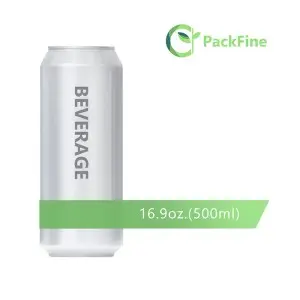
Standard 500ml Can Dimensions Used in Global Production
Although minor variations exist depending on regional standards and can manufacturers, the industrial 500ml aluminum can generally follows a tightly controlled dimensional range.
Typical engineering dimensions include:
● Overall height: approximately 168 mm to 190 mm
● Body diameter: approximately 66 mm to 73 mm depending on can body design
● End (lid) diameter: standardized to match global seaming equipment
● Fill volume: 500 ml nominal capacity under standard filling conditions
● Dome and base curvature: engineered for pressure resistance and stacking stability
These values are not arbitrary. They are designed to maintain compatibility across high-speed filling systems operating at thousands of cans per hour.
Why These Dimensions Must Stay Strictly Controlled
In industrial beverage production, dimensional consistency is not a preference—it is a requirement for machine compatibility and production safety.
If the can height or diameter deviates beyond tolerance limits, the following issues can occur:
● Misalignment in filling and seaming stations
● Pressure imbalance during carbonation filling
● Labeling errors or inconsistent branding placement
● Conveyor line jams and mechanical downtime
● Improper stacking during palletization and transport
This is why 500ml can dimensions are controlled within extremely narrow tolerance ranges, often within fractions of a millimeter in industrial production.
Engineering Logic Behind the 500ml Geometry
The 500ml aluminum can is designed based on a combination of fluid dynamics, structural engineering, and industrial automation requirements.
Key design logic includes:
● Height-to-diameter ratio optimized for stacking strength and stability
● Internal volume calibrated for carbonation expansion and headspace control
● Wall geometry designed for pressure resistance during pasteurization or carbonation filling
● Seam area standardized for high-speed double seaming operations
● Curvature at top and bottom designed to distribute internal pressure evenly
This is why 500ml cans can withstand both high internal pressure (carbonated beverages) and high external pressure (transport stacking loads).
Dimensional Impact on High-Speed Filling Systems
Modern beverage factories operate fully automated filling lines where cans move continuously through multiple stations.
The 500ml can must precisely match system parameters such as:
● Conveyor rail spacing and guide rail alignment
● Filling nozzle height calibration
● Seaming chuck positioning accuracy
● Sensor detection thresholds for inspection systems
● Coding and printing alignment systems
Even a 1 mm deviation in height can affect synchronization between filling heads and sealing units, especially in ultra-high-speed lines exceeding 40,000 cans per hour.
Relationship Between Dimensions and Packaging Efficiency
The standardized geometry of the 500ml can is also optimized for logistics performance, not just production efficiency.
From a supply chain perspective, dimensional consistency ensures:
● Maximum pallet utilization with minimal empty space
● Stable stacking without deformation under load
● Efficient container loading for export shipments
● Reduced transportation cost per unit volume
● Compatibility with automated warehouse systems
The cylindrical shape combined with precise height control allows predictable volume packing calculations, which is critical for global beverage distribution networks.
Material Thickness and Structural Performance Integration
While external dimensions define compatibility, internal structural engineering defines performance.
The 500ml can body is typically engineered with:
● Thin-wall aluminum construction for lightweight efficiency
● Reinforced base design to withstand internal pressure
● Controlled top dome curvature for carbonation stability
● Optimized seam area thickness for sealing reliability
● Surface coating systems for chemical resistance and product protection
The dimensional stability of the can is closely linked to material behavior under pressure, especially in carbonated or heat-processed beverages.
Why Brand Owners Care About Dimensional Precision
For beverage brands, 500ml can dimensions directly affect product presentation and market consistency.
Dimensional accuracy influences:
● Label alignment and full-sleeve printing accuracy
● Shelf appearance consistency across global markets
● Compatibility with retail packaging trays and display systems
● Standardization across multiple filling facilities worldwide
● Visual branding consistency for consumer recognition
In global beverage markets, even slight dimensional inconsistency can lead to visual misalignment, which affects brand perception.
Sustainability Considerations in Dimensional Design
Modern 500ml cans are also designed with material efficiency in mind, where dimensions are optimized to reduce aluminum usage without compromising strength.
Key sustainability-driven design factors include:
● Lightweight wall structure to reduce raw material consumption
● Optimized height-to-volume ratio for material efficiency
● Reduced carbon footprint in transportation due to lighter weight
● High recyclability supporting circular economy systems
● Compatibility with recycled aluminum production processes
This balance between performance and sustainability is a major driver of modern can engineering.
Industry Demand and Standardization Trends
The global beverage industry is moving toward tighter dimensional standardization to support automation and global supply chain integration.
Key trends include:
● Increased automation requiring stricter dimensional tolerance control
● Growth in high-speed filling lines demanding better mechanical precision
● Expansion of global beverage brands requiring cross-country compatibility
● Stronger regulatory focus on packaging safety and consistency
● Continuous optimization of lightweight aluminum structures
These trends reinforce the importance of precise 500ml can dimensions in industrial applications.
Conclusion
The 500ml aluminum can is a highly engineered packaging standard where every millimeter matters. Its dimensions are not only designed for volume capacity but also for industrial compatibility, filling line efficiency, transportation optimization, and global branding consistency.
For beverage manufacturers and packaging decision-makers, understanding these dimensional standards is essential for ensuring stable production, reducing operational risk, and maintaining product quality across global markets.
FAQ
1. What is the standard height of a 500ml aluminum can?
The height typically ranges from 168 mm to 190 mm depending on the can structure and manufacturer design specifications.
2. Why do 500ml can dimensions vary slightly between suppliers?
Small variations occur due to differences in neck design, wall shaping technology, and production equipment, but all remain within strict industrial tolerances.
3. Why are precise can dimensions important for filling lines?
Because high-speed filling and sealing systems require exact mechanical alignment; even small deviations can cause line stoppages or sealing defects.
4. Does can size affect beverage quality or shelf life?
Indirectly yes. Proper dimensions ensure correct sealing pressure and headspace control, which are essential for maintaining carbonation and product stability.
Post time: Jun-12-2026