


Peel off ends and easy open ends are both designed to simplify package opening, but they create very different results once the container is opened. A peel off end uses a flexible foil membrane that can be removed to expose a wide opening. An easy open end uses a scored metal panel and pull tab, allowing part or all of the rigid panel to open along a controlled line.
The better option depends on more than opening convenience. Product form, required barrier protection, thermal processing, repeated access, can diameter, closing equipment, and package presentation all affect the final choice.
Understanding these differences helps connect the can end structure with the way the packaged product is filled, stored, opened, and used.
The Clearest Difference Appears After Opening
Before opening, both types can provide a sealed metal package. After opening, their structures behave differently.
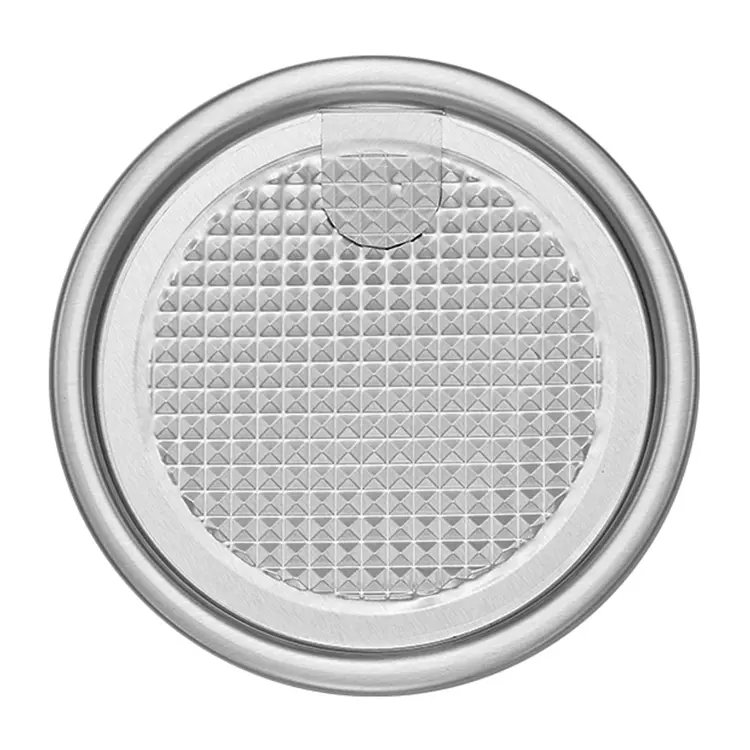
A peel off end leaves a rigid metal ring around the can opening while the flexible foil membrane is removed. This creates an unobstructed opening that is convenient for scooping, pouring, or repeatedly accessing dry products.
An easy open end opens through a scored section in the metal panel. Depending on the design, the opening panel may remain attached or be fully removed. The rigid metal structure makes this type suitable for many canned foods and other applications requiring a conventional metal closure.
| Comparison | Peel Off End | Easy Open End |
|---|---|---|
| Opening component | Flexible foil membrane | Scored metal panel |
| Opening method | Lift and peel | Pull tab and fracture score |
| Opening result | Wide, unobstructed access | Defined opening in the metal panel |
| Common applications | Milk powder, coffee, nuts, nutrition powder, snacks | Canned food, pet food and selected dry products |
| Reclosure option | Often combined with a plastic overcap | Usually not designed for repeated reclosure |
| Main performance focus | Seal strength, foil barrier and peel consistency | Score control, tab strength and panel opening |
| Decoration option | Printed foil membrane | Printed or colored metal end and tab |
The table shows the structural difference, but the packaged product and processing conditions remain the deciding factors.
When Does a Peel Off End Provide Better Access?
Peel off ends are particularly effective when the contents need to be reached through most of the container opening.
Milk powder and nutritional powder are common examples. A wide opening allows a measuring scoop to enter the can without being restricted by a partially attached metal panel. Coffee, nuts, powdered beverages, snacks, and dry food ingredients can also be poured or removed more easily.
The removable foil membrane provides several practical advantages:
- The opening can extend across most of the can diameter.
- No large rigid panel remains over the contents.
- The foil can show whether the original seal has been opened.
- Printed foil can display instructions, logos, or product information.
- A separate plastic overcap can be added for repeated closure.
This structure is useful for products that are not consumed immediately after first opening. The peelable membrane protects the original contents, while the overcap supports storage between uses.
The overcap does not replace the foil seal. The two components have different functions: the foil provides the original barrier, and the plastic lid provides convenient reclosure afterward.
Where Does an Easy Open End Offer a More Suitable Structure?
An easy open end uses a rigid metal panel with a pull tab and accurately controlled score line. Pulling the tab transfers force to the scored area, allowing the panel to open in a predictable direction.
This design is widely used where the package requires a strong metal closure and a direct opening method. Depending on the end structure and processing specification, it can be suitable for canned food, pet food, dry products, and other metal containers.
Its performance depends on the relationship between:
- Metal thickness
- Score residual
- Tab position
- Rivet formation
- Panel strength
- Internal coating
- Can body and seam compatibility
The score must remain strong throughout filling, thermal processing, transport, and storage, but it must still open without excessive force. If the score is too deep, the end may lose resistance to impact or pressure. If it is too shallow, opening may become difficult.
An easy open end is therefore not simply a metal lid with a ring pull. It is a controlled opening system built into the end panel.
Barrier Protection Depends on the Complete End Structure
The opening style is only one part of product protection.
For a peel off end, barrier performance depends on the foil laminate, sealing layer, ring surface, and continuity of the bonded area. The membrane may help limit exposure to moisture, oxygen, odors, dust, and external contamination, but only when the seal remains uniform around the complete opening.
For an easy open end, protection depends on the rigid metal panel, internal coating, score condition, sealing compound, and completed double seam.
In both cases, the end must work together with:
- The can body
- The bottom closure
- Internal protective coatings
- Filling and closing conditions
- Secondary packaging
- Storage environment
A high-barrier foil cannot compensate for an incomplete seal. A strong metal end cannot protect the contents if the double seam is unsuitable. Package protection must be evaluated as one connected system.
Can the Same Can Body Use Both Types of Ends?
Not automatically.
Two ends may have a similar nominal diameter but use different ring profiles, curl dimensions, opening structures, and closing requirements. The can body flange and closing equipment must be suitable for the selected end.
Before changing from an easy open end to a peel off end, or in the opposite direction, several areas need to be checked:
- Can body diameter
- Flange dimensions
- End curl and ring profile
- Seaming chuck and roll configuration
- End feeding system
- Required opening diameter
- Product and processing conditions
A can body originally designed for one end type may require dimensional confirmation, tooling changes, or a different top structure before another end can be used reliably.
The product capacity alone is not enough to determine compatibility. Containers with similar filling volumes may have different body diameters and flange designs.
Thermal Processing Can Change the Suitable End Type
Some packaged foods are filled under normal conditions, while others pass through hot filling, pasteurization, or retort processing. These processes expose the package to heat, pressure, and cooling changes.
A standard peel off end should not automatically be assumed suitable for every wet or thermally processed product. The foil laminate, seal layer, ring coating, and complete closure must be designed for the actual process.
Likewise, an easy open end used for heat-processed food needs suitable panel strength, coating protection, score stability, and seam performance.
The decision should reflect:
- Filling temperature
- Product acidity
- Oil or salt content
- Processing temperature and time
- Internal pressure changes
- Expected storage period
For dry products without severe thermal processing, peel off ends often provide a convenient combination of barrier protection and wide access. More demanding processes require end structures developed and validated for those conditions.
What Makes a Peel Off End Open Cleanly?
A good peeling result is not defined only by low opening force.
The membrane should begin lifting at the intended point, continue around the ring without sudden changes, and separate without tearing into fragments. The metal ring should remain smooth, and the sealed surface should not show excessive residue.
Clean opening depends on:
- Stable foil thickness
- Suitable laminate structure
- Uniform heat-seal coating
- Accurate membrane positioning
- Consistent bonding strength
- Practical tab shape
- Clean ring surfaces
If the bond is too weak, the membrane may lift during handling. If it is too strong, the foil may tear before it is fully removed. The target is a continuous peel that remains secure before opening and convenient afterward.
What Makes an Easy Open End Perform Consistently?
An easy open end must maintain a stable relationship between the tab, rivet, score, and metal panel.
Consistent production helps control:
- Initial tab-lift force
- Score rupture position
- Opening direction
- Panel deformation
- Tab retention
- Opening-edge condition
Small differences in score residual or rivet formation can change the opening experience. Stability across large production runs is therefore more important than the appearance of a few individual samples.
The end also needs to arrive at the filling line without curl damage, panel deformation, contamination, or coating damage. Packaging and handling remain part of end performance.
Peel Off Ends and Easy Open Ends from Packfine
Packfine provides peel off ends and easy open ends for different can diameters and packaging applications. End dimensions, foil structure, opening design, printing, coating, can body compatibility, processing requirements, and transport protection can be coordinated as part of the complete packaging solution.
For products requiring wide access and optional reclosure, peel off ends combine a stable metal ring with a removable foil membrane. For applications requiring a rigid scored metal panel, easy open ends provide controlled opening through an integrated pull-tab structure.
Matching the end structure with the product, can body, and filling process helps maintain reliable sealing, consistent opening, and a clean package appearance.
FAQ
What is the main difference between a peel off end and an easy open end?
A peel off end uses a flexible foil membrane that is peeled from a metal ring. An easy open end uses a pull tab to open a scored rigid metal panel.
Can a peel off end be used with a plastic overcap?
Yes. The foil membrane provides the original seal, while the plastic overcap can close the container again after the foil has been removed.
Are peel off ends suitable for wet food?
Suitability depends on the foil structure, sealing system, product formula, and processing conditions. A standard dry-product peel off end should not automatically be used for wet food or thermal processing without appropriate validation.
Can an easy open end be replaced directly with a peel off end?
Not necessarily. The can diameter, flange, end profile, closing tooling, feeding system, product conditions, and required opening size all need to be confirmed before changing the end type.
Post time: Aug-05-2026