


Both Peel Off End and Full Aperture Easy Open End provide broad access to a metal container, but they create different packaging structures. The difference is not only in how they open. It also affects the usable space after opening, whether a secondary closure is needed, and how the container top should be designed.
For food packaging, End Size alone is not enough to make the right choice. A closure may fit the container dimensionally but still be unsuitable if its opening method does not match how the product will be accessed and stored after opening.
Peel Off End: A Two-Stage Closure Concept
A Peel Off End usually consists of a metal ring and a flexible peelable membrane. The membrane is sealed to the ring and removed during opening, while the rigid outer ring remains attached to the container.
This structure is useful when the package needs to work in two stages. Before opening, the Peel Off End provides the original closure. After the membrane is removed, a plastic overcap or another secondary closure can be used for repeated access and storage.
The practical value is not simply that the membrane is easy to peel. The remaining opening must also provide enough space for normal use. If a scoop, spoon, or other utensil needs to enter the container repeatedly, the usable opening width and the remaining top structure should be considered together.For this reason, Peel Off End selection should focus on the whole post-opening experience rather than only on the first opening.
Full Aperture Easy Open End: More Direct Access to the Container Top
A Full Aperture Easy Open End uses a scored metal panel that is removed during opening. Instead of peeling away a flexible membrane, the user removes the rigid panel, exposing a large portion of the container top.Its main advantage is the amount of direct access it creates after opening. With less material covering the top, the contents can be reached, poured, or removed more directly.
This makes the Full Aperture structure different from a Peel Off End even when both provide a large opening. A Peel Off End supports a membrane-based closure system that can easily work with a secondary overcap, while a Full Aperture End focuses more on exposing the top of the container after the metal panel is removed.The better option depends on what the package needs to do after opening.
Why the Same End Size Does Not Mean the Same Package
Industry size codes such as 307 and 401 are useful for identifying End size families, but they do not describe the entire closure structure.
A 307 Peel Off End and a 307 Full Aperture End may belong to the same general size range, but this does not mean they can be directly substituted. The opening mechanism, container top design, seaming relationship, material, and secondary closure requirements may still be different.
A practical way to understand this is:End Size determines dimensional matching, while End Type determines how the package opens and functions afterward.
For an existing package, changing from FA to POE or from POE to FA should therefore involve more than checking diameter. The current container top, seaming conditions, opening method, and any secondary closure should also be reviewed.
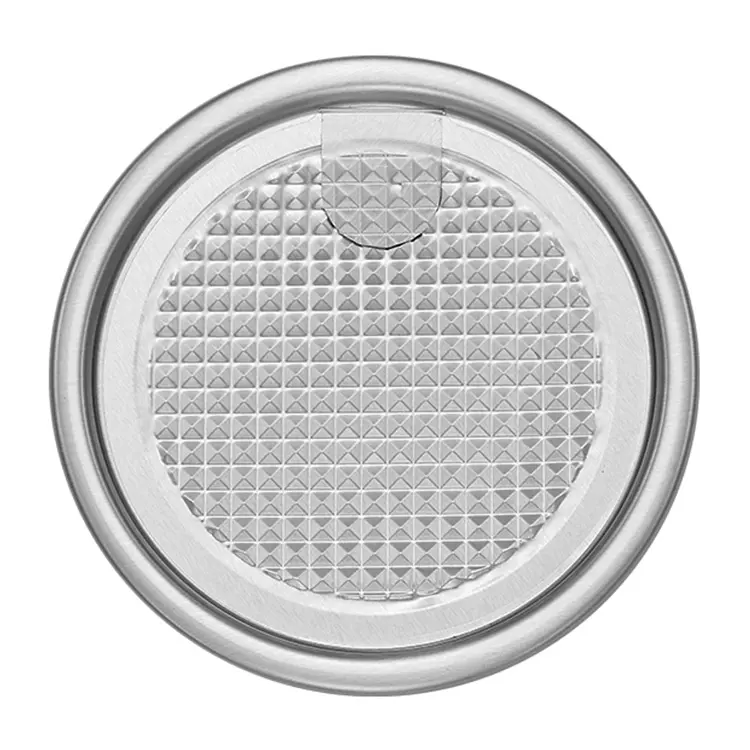
Peel Off End vs Full Aperture End: Key Differences
| Comparison | Peel Off End | Full Aperture Easy Open End |
|---|---|---|
| Opening method | Flexible membrane is peeled away | Rigid metal panel is removed |
| Top after opening | Outer metal ring remains | Large top area becomes directly accessible |
| Secondary closure | Commonly suitable for an overcap | Depends on the container top design |
| Repeated access | Well suited to two-stage packaging | Requires separate reclosure planning |
| Main focus | Original closure + repeated use | Broad access after opening |
| Same size directly interchangeable? | No | No |
The two structures should not be treated as simple alternatives where one is always better than the other. The right choice depends on how the product is removed from the container and how the package is expected to work after first opening.
Application Should Follow Product Use, Not a Fixed Food Category
Milk powder, coffee, tea, nutritional products, nuts, candy, and other foods can all use large-opening metal closures, but their packaging needs are different.
Products that are accessed repeatedly with a scoop place more emphasis on usable working space and convenient reclosure. In this type of package, a Peel Off End combined with a plastic overcap can create a practical original-seal-and-reuse system.
For products where broad top access is more important, a Full Aperture End may be more suitable. This can be useful when the contents are poured directly or when larger pieces need to pass through the opening without unnecessary restriction.
However, it is not accurate to reduce the decision to “powders use POE” and “granular foods use FA.” The same product may use either structure depending on the container design, opening method, and storage requirements after opening.
The better question is:
How does the product need to be accessed after the container is opened?
That question usually provides a clearer direction than the product category alone.
Existing Packages and New Packages Need Different Approaches
For an existing metal container, End selection should begin with the current top specification. The existing End Size, container structure, seaming conditions, and opening requirements should be confirmed before changing the closure type.
If the package already works well with a Full Aperture End, switching to a Peel Off End should only be considered if the membrane-based structure or secondary overcap provides a clear functional benefit. The same applies in the opposite direction.
A new packaging project allows more flexibility. The container opening, End Type, and secondary closure can be planned together from the beginning. This reduces the risk of finalizing the can first and then discovering that the preferred End does not fit the intended use.
Multi-Size Product Lines Need More Than One Matching End
Many food products expand into several capacities or SKUs. In that situation, the End should not be selected only for the first package size.
If the main format uses a 307 End, future smaller or larger containers may need different End Sizes while maintaining the same opening concept. Planning this early can help different SKUs keep a more consistent package experience without redesigning the closure system for every new size.
For multi-size product lines, the useful question is not only “Which End fits this can?” but also:Can the same closure concept continue across future capacities?
This is especially important when the package uses a secondary overcap, because the End, container top, and overcap may need to remain compatible as the range expands.
How Packfine Supports Different Packaging Requirements
Once the container structure, opening method, and post-opening use are clear, matching a specific End becomes much easier.
Packfine provides both Peel Off Ends and Full Aperture Easy Open Ends, with multiple size families and material options including aluminum and tinplate. This allows different packaging projects to choose an End based on the actual container and intended use rather than being limited to one closure type.
For an existing package, the matching process can begin with the current container size, existing End structure, and desired opening method. If a change to POE is being considered, the need for a plastic overcap and the usable opening after the membrane is removed should also be checked. If broad top access remains the priority, Full Aperture End options can be evaluated around the current container design.
For a new package, the container diameter, End Type, material, and secondary closure can be planned as one system. This is also useful for projects that may later expand into several capacities.
Packfine’s broader range of POE and FA sizes gives more flexibility when building a multi-SKU packaging system. Different capacities can use different End Sizes while keeping a similar opening concept across the range.The value is not simply having more End models available. It is the ability to combine End Type, End Size, material, container, and opening requirements into a more suitable packaging solution.
Conclusion
Peel Off Ends and Full Aperture Easy Open Ends can both provide large openings, but they create different package structures.
A Peel Off End uses a flexible membrane and is well suited to packaging that combines an original closure with later repeated access. A Full Aperture End removes a rigid metal panel and provides more direct access to the container top.The correct choice should consider the container structure, opening method, usable access area, secondary closure, and future package sizes rather than End Size alone.
With multiple POE and Full Aperture End specifications and material options, Packfine can support both existing containers and new packaging projects, including product lines that may expand into several capacities.
FAQ
What is the main difference between a Peel Off End and a Full Aperture End?
A Peel Off End uses a peelable membrane attached to a metal ring, while a Full Aperture End uses a removable metal panel. The two structures create different opening and post-opening conditions.
Can a POE and FA with the same size code be directly substituted?
No. The same size code does not guarantee that the container top, seaming structure, opening method, and secondary closure are compatible.
Does product type alone determine which End should be used?
No. The same food can use different End Types depending on the container design, access method, and storage requirements after opening.
What should be confirmed before selecting an End?
The container top size, End Type, material requirement, opening method, secondary closure, and future capacity plans are the most useful starting points.
Post time: Sep-07-2026