


When searching for Aluminum Can Suppliers, the first things people usually see are capacities, dimensions, colors, printing options, and different product catalogs. However, for a beverage packaging project that needs to be put into actual production, simply being able to provide a 330ml aluminum can does not explain very much.
The same 330ml capacity can use different can body proportions. The same 202 can end also needs to match the specific can body structure. A project may currently plan only one specification, but later it may add 250ml, 355ml, 473ml, or 500ml sizes. As the product range expands, what really affects packaging stability is often not one individual product, but whether different specifications can form a clear and continuously expandable packaging combination.
Therefore, when evaluating whether an Aluminum Can Supplier is suitable for a beverage project, it is more important to consider whether Can Size, Can Format, Can End, Printing, and the final beverage application can be handled within the same system.
The Same Capacity Does Not Necessarily Mean the Same Packaging Solution
One of the easiest ways to oversimplify beverage cans is to define them only by capacity.
For example, 330ml, 355ml, and 500ml are all very common capacity descriptions, but capacity alone cannot determine the actual structure of a can. The same capacity can be achieved through different combinations of can diameter and height, while Standard, Sleek, and Slim can formats also differ clearly in appearance proportions, packaging presentation, and production compatibility.
This is why, when evaluating Aluminum Can Suppliers, it is not enough to check whether a certain capacity is available. It is also necessary to look at whether the supplier has a clear range of can formats.
For beer, carbonated soft drinks, sparkling water, energy drinks, and other beverage products, packaging positioning can be very different. Some projects place more emphasis on classic and stable can proportions, while others want to strengthen product recognition through a taller and slimmer appearance. In this case, what matters is not simply whether “330ml is available,” but whether a suitable combination can be found among different can formats.
When one project includes several capacities at the same time, this becomes even more important. A 250ml Slim, 330ml Sleek, and 500ml Standard can may serve different product roles, but they still need to maintain a unified packaging logic.
It Is Important Whether an Aluminum Can Supplier Considers Both the Can and the Can End
For beverage packaging, the Can Body is not a complete product on its own.
The can body eventually needs to be seamed with a Can End to form a complete sealed package. Therefore, confirming only the can dimensions without confirming the matching end structure at the same time may create unnecessary uncertainty during later production.
End Sizes such as 200 and 202 are only basic identification information. Different applications may also involve SOT, RPT, and other Can End structures. What really needs to be confirmed is not simply whether a 202 End is available, but which End should be matched with the current can body and whether this combination is suitable for the actual beverage packaging conditions.
This is also where comprehensive Aluminum Can Suppliers can provide more value.
If the Can Body and Can End can be confirmed within the same product system, it can reduce information gaps between different packaging components. Especially when several capacities or several can formats are involved, a clear Can + End matching relationship is more important than simply having a large number of can formats.
In other words, what beverage packaging really needs is not a very long product catalog, but a clear matching relationship.
A Product Series Is Often More Worth Planning in Advance Than One Individual Can
Many beverage projects begin with only one main specification.For example, a project may start with 330ml and later add 250ml, 355ml, 473ml, or 500ml as the product range changes. It may also start with a Standard Can and later introduce Sleek or Slim Cans for new products.
If the can body, can end, and printing solution have to be determined again from the beginning every time a new SKU is added, the entire packaging system will become increasingly complicated.
Therefore, when evaluating Aluminum Can Suppliers, it is useful to consider a more practical question in advance:If new capacities or can formats are added in the future, can the existing packaging system be expanded easily?
This does not mean that all beverages must use exactly the same structure. Instead, there should be a clear specification logic between different SKUs. For example, which capacities are suitable for Standard cans, which products are more suitable for Sleek or Slim cans, which Can Ends correspond to different can formats, and how printing visuals can remain consistent across cans with different heights and diameters.
For beverage ranges with multiple SKUs, this combination capability has more long-term value than simply finding one suitable 330ml can.
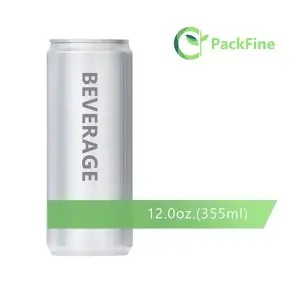
Printing Is Not an Independent Step; It Should Be Considered When the Can Format Is Determined
An aluminum can is both a packaging container and one of the most important visual carriers of a beverage product.
Therefore, printing design cannot be completely separated from the can format.
The same Artwork may look very different when applied to cans with different diameters and heights. A Slim Can is narrower and taller, while Sleek and Standard Cans also have different visual proportions. If the original design is simply copied directly, problems may occur with text proportions, the position of key graphics, or the overall visual balance.
Therefore, an Aluminum Can Supplier that is truly suitable for multi-SKU projects should not only provide the ability to print. More importantly, it should be able to coordinate can format selection with the printing solution.
For example, when a beverage range expands from 330ml to 250ml and 500ml, different can bodies can maintain the same brand visual system, but the layout usually needs to be adjusted according to the actual can proportions instead of simply being enlarged or reduced.
This type of coordination allows different specifications to still look like they belong to the same product series.
Different Beverages Focus on Different Points When Selecting Aluminum Cans
Aluminum beverage cans are used for a wide range of applications, but this does not mean that all beverages should use exactly the same packaging approach.
Beer, carbonated soft drinks, sparkling water, energy drinks, and juice-based beverages often differ in brand positioning, preferred can format, capacity combinations, and packaging presentation.
For example, energy drinks often use Slim or Sleek structures to create a taller and lighter visual appearance. Beer and carbonated soft drinks may use more traditional Standard Cans, or other can formats depending on product positioning. For beverage projects with multiple SKUs, what matters more is creating a reasonable combination between capacity, can format, and Can End.
Therefore, when comparing Aluminum Can Suppliers, the real question is not “which can is the best,” but:
Is there a wide enough product combination to allow different beverage projects to choose the packaging format that truly suits them?
Only when the product range is complete enough can the selection avoid being limited to one single can format or one single capacity.
Complete Specifications Are More Valuable Than Simply Having Many Specifications
A large number of products does not automatically mean strong project compatibility.
For aluminum beverage cans, what matters more is whether each product has a clear specification relationship. Capacity, can diameter, can height, Can Format, End Size, and application direction should correspond clearly with one another instead of simply displaying a large number of model names.
For example, if a 330ml Can only states its capacity, the actual product information is still incomplete. If it is further confirmed whether it is Standard or Sleek, what its exact dimensions are, and which Can End it should match, then the specification becomes more useful for actual project reference.
This is why professional Aluminum Can Suppliers should make product selection clearer rather than making it more complicated as the number of products increases.
When the relationship between Can Body and Can End, different capacities, and different can formats is clearly established, it becomes more direct to add new products, adjust packaging, or plan multiple SKUs later.
A Truly Valuable Aluminum Can Supplier Should Provide a Complete Packaging Combination
When selecting aluminum cans, looking only at one individual product can easily simplify the question into:
“Is this capacity available?”
However, once the project enters actual beverage packaging, the questions usually become:
Which can format should be used for this capacity?
Which Can End should be matched with it?
If another capacity is added, how can the packaging series remain consistent?
How should the printing design be adjusted between different can formats?
Which combinations are available for different beverage applications?
Therefore, evaluating Aluminum Can Suppliers should ultimately not focus only on whether they can provide one can. It should focus on whether they can form a complete Can Packaging Solution around the beverage project.
Packfine’s product range covers Standard, Sleek, and Slim aluminum beverage cans in multiple capacities, while also providing corresponding Can End products. This allows can selection to go beyond a single capacity and further consider Can Format, Can End, Printing, and specific beverage applications as part of an overall plan.
For projects with only one specification, this means a clearer selection process. For beverage ranges that include multiple capacities and multiple SKUs, it means a more complete packaging combination can be established from the beginning.
FAQ
Is it enough to compare only capacity when selecting Aluminum Can Suppliers?
No. The same capacity can correspond to different diameters, heights, and can formats, so Standard, Sleek, or Slim structures, Can Ends, and the final beverage application also need to be considered.
Why is it more meaningful to provide both Aluminum Cans and Can Ends?
Because the can body and can end eventually need to form a complete sealed package. Confirming the Can and Can End together can establish a clearer matching relationship between different can formats and their corresponding Ends.
How should aluminum can specifications be planned for a multi-SKU beverage range?
The capacities and product positioning of different SKUs can be determined first, followed by the selection of Standard, Sleek, or Slim can formats, while also confirming the Can End and printing solution so that different specifications maintain a unified packaging logic.
How should Standard, Sleek, and Slim Aluminum Cans be selected?
No single can format is suitable for every beverage. The selection should be based on capacity, product positioning, packaging appearance, Can End, and the overall specification planning of the product range.
Post time: Sep-01-2026