


In beverage packaging, a can end is not simply a standard component selected by diameter. Beer, carbonated soft drinks, energy drinks, sparkling water, and other beverages can place different requirements on the structural strength, internal protection, opening performance, and appearance of the end.
A suitable can end must do more than fit the can body. It needs to remain stable throughout the entire life of the package: withstand internal pressure after filling, maintain package integrity during storage and transportation, preserve its shape and appearance, and provide smooth opening when the beverage is consumed.
For this reason, choosing a can end involves more than checking terms such as “202,” “aluminum,” or “easy open.”
Beverage Type Changes What a Can End Needs to Do
Different beverages create different conditions inside an aluminum can.
Beer, carbonated soft drinks, and sparkling water, for example, normally contain carbonation that creates internal pressure. Changes in temperature and storage conditions can also affect the pressure inside the package.
The can end therefore needs enough structural stability to maintain its shape under normal filling, transportation, storage, and handling conditions.
Energy drinks often use slim or sleek aluminum cans, where visual presentation is particularly important. Different end colors, tab colors, and surface designs can become part of the complete package appearance.
The relationship can be summarized as follows:
| Beverage Type | Important Can End Considerations |
|---|---|
| Beer | Package integrity, opening consistency, internal protection |
| Carbonated soft drinks | Pressure resistance and structural stability |
| Sparkling water | Sealing performance, panel stability, opening behavior |
| Energy drinks | Can format compatibility, appearance, opening experience |
| Functional beverages | Product compatibility, internal coating, long-term stability |
This does not mean that every beverage requires a completely different can end. Instead, beverage characteristics should be considered together with can format and packaging requirements.
A Can End Contains Several Functional Areas
Although the top of a beverage can looks simple, a complete can end performs several functions at the same time.
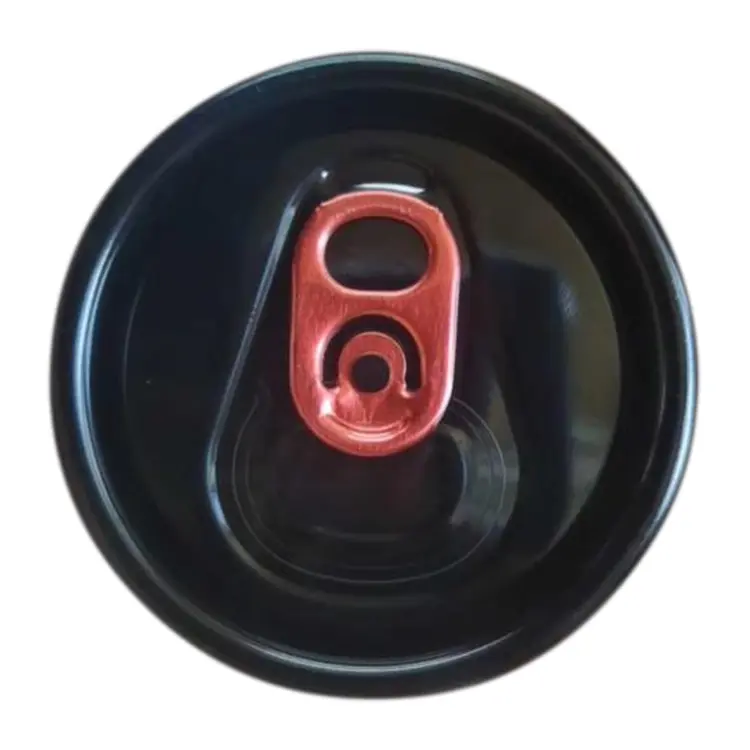
The main panel must provide structural stability. The scored opening area needs to open in a controlled way. The pull tab transfers force from the finger to the opening panel, while the rivet connects the tab securely to the end.
These features work together rather than independently.
For example, making an end easier to open does not mean that the score line should simply be made deeper. The opening area still needs sufficient strength to remain intact during storage, stacking, transportation, and normal handling.
The pull tab is also more than a decorative feature. Its shape, position, and rigidity influence how opening force is transferred to the scored panel.
A reliable easy open can end therefore needs to balance two different requirements: structural integrity before opening and convenient operation when the package is opened.
Internal Surface Protection Is an Important Part of Can End Performance
From the outside, the most visible parts of a can end are the aluminum surface and pull tab. However, the internal side of the end is continuously exposed to the environment inside the beverage package.
Beverages can differ in acidity, sugar content, carbonation, and other formulation characteristics. These differences may create different requirements for the internal surface of the package.
For this reason, can ends normally use an appropriate internal protection system to help separate the beverage from direct contact with the metal surface.
Internal protection can influence more than the appearance of the end. It also contributes to the long-term stability of the beverage package.
When evaluating a can end for a specific beverage, appearance and dimensions are therefore only part of the picture. Internal surface condition, coating consistency, and compatibility with the intended beverage also deserve attention.
This can be particularly important for beverages with more complex formulations or longer storage periods.
Why Is the 202 Can End So Common in Beverage Packaging?
The 202 can end is one of the most commonly referenced end formats in the beverage can industry.
A common misunderstanding, however, is that every can end carrying the 202 designation is exactly the same.
In reality, 202 is primarily an important size designation within the beverage can end system. Products within the same general 202 format may still differ in material configuration, pull tab design, surface finish, color, opening structure, and intended application.
In other words, the 202 designation helps define the size system, but it does not describe every performance characteristic of the finished end.
Can body specifications, can format, beverage type, and appearance requirements still need to be considered.
This is why 202 can ends can be found across many beverage categories while individual packaging projects may still use different end configurations.
Can Ends Are Becoming Part of Beverage Package Design
Traditionally, the top of many beverage cans remained in a standard silver aluminum finish.Today, the visual role of the can end is becoming more noticeable.
Colored ends, colored tabs, different surface treatments, and coordinated top designs can all contribute to the overall appearance of the finished package.
This is particularly relevant for sleek cans, slim cans, and beverage packages with strong visual identities. The can end is no longer only the component that closes the package.
The color visible from the top, the appearance of the pull tab, and the finish of the aluminum surface can all become part of the packaging design.
Can end selection can therefore be considered from two perspectives.The first is functional performance. The second is visual coordination with the aluminum can body.
When one beverage brand uses several flavors, product lines, or capacities, changes in the end or tab appearance can also help create clearer differentiation between products.
Can End Packaging Is Also Part of Product Quality
Production is not the final stage at which the condition of a can end can change.
Can ends are lightweight components with precisely formed edges. Improper compression, contamination, moisture, or impact during transportation and storage may affect their original condition.
Packaging therefore needs to protect sensitive edge areas while reducing exposure to dust, foreign particles, and mechanical damage.
Different specifications, colors, or pull tab designs should also remain clearly identified and separated.
For a can end, the complete product solution includes not only how the end is produced, but also how its dimensions, surface condition, cleanliness, and structural integrity are maintained before use.
Looking at Can Ends as Part of the Complete Beverage Package
The role of a can end goes far beyond simply closing the top of an aluminum can.
A suitable end needs to respond to several requirements at the same time, including beverage characteristics, can format, structural performance, opening behavior, appearance, storage, and transportation.
Instead of asking only, “Is this a 202 can end?”, more useful questions include:
- Is the can end suitable for the intended beverage?
- Does it correspond to the selected aluminum can format?
- Does the opening design fit the intended package positioning?
- Is the internal surface suitable for the beverage?
- Can the appearance coordinate with the can body design?
- Can different production batches maintain consistent quality?
When these factors are considered together, the can end becomes more than a standard aluminum component. It becomes an important part of the complete beverage packaging system.
Packfine provides aluminum beverage cans and can ends for different can formats, capacities, beverage applications, and appearance requirements, helping create better coordination between the can body, end specification, functional requirements, and overall package design.
FAQ
What Beverages Can Use a 202 Can End?
202 can ends are widely associated with aluminum cans for beer, carbonated soft drinks, sparkling water, energy drinks, and other beverages. Actual compatibility should still be confirmed according to the can neck specification, can format, and intended application.
Can Can Ends Be Made in Different Colors?
Depending on the product configuration, can end surfaces and pull tabs can use different colors or visual finishes. These options can help coordinate the top of the can with the overall aluminum beverage can design.
What Is Important for an Easy Open Can End?
An easy open can end must balance convenient opening with structural stability. Important factors include the score design, pull tab connection, rivet stability, end strength, internal surface protection, and consistent opening behavior across production batches.
Post time: Aug-10-2026