


Choosing the right beverage can sizes becomes more important as a beverage range expands. A product line may start with one 330ml can, then gradually add smaller functional drinks, larger-volume versions, new flavors, and different body formats such as Standard or Sleek. Without a clear structure, these additions can quickly create too many can specifications, end combinations, and packaging variations.
For a multi-product beverage range, beverage can sizes should therefore be planned as part of the overall packaging system rather than selected separately for each new product. The goal is not to use as many capacities as possible, but to create a limited number of stable can formats that can support different product roles and future extensions.
Start with Product Roles When Selecting Beverage Can Sizes
When planning beverage can sizes, it is better to begin with the role of each beverage rather than simply looking at all available capacities.
For example, a beverage portfolio may include compact functional products, a core everyday range, and larger-volume extensions. In terms of can sizes, smaller products may use 180ml, 200ml, or 250ml cans. Mid-size formats such as 330ml or 355ml can serve as the main package, while 473ml or 500ml cans can support larger-volume products.
The value of this approach is that every format has a clear purpose.A new product variant does not always require a new aluminum can size.This becomes particularly important for beverage ranges that continue to add new flavors and versions over time.
One Base Can Format Can Support Multiple Product Variants
One of the easiest ways for a multi-product beverage range to become overly complicated is to introduce a new packaging specification every time a new product is added.
In reality, if the main differences between products are flavor, formulation, or visual design rather than serving volume, the same base can format can often continue to be used.
For example, a 330ml core series may include original, zero-sugar, lemon, berry, and tropical versions. All five can use the same body dimensions, overall proportions, and can end specification, while colors, graphics, and product information distinguish each version.
This approach does more than create a consistent appearance. It also keeps the packaging structure stable. Logo placement, product information areas, nutrition panels, and outer packaging dimensions can all continue to follow an established format instead of being redesigned every time a new product is introduced.
For beverage programs designed for long-term expansion, how many product variants one established can format can support may be more valuable than simply having many different can formats available.
A New Capacity Should Solve a Clear Product Need
Adding a new aluminum can size should have a clear reason behind it.
For example, if 330ml is already the core format, adding a 200ml version makes more sense when the smaller package serves a different drinking occasion, such as a more concentrated single serving, a functional beverage, or a product with a stronger flavor profile.
Similarly, adding a 500ml version should create a clear larger-volume option rather than simply putting more of the same beverage into a bigger container.
A well-structured capacity range might therefore look like this:
- 200ml or 250ml for compact, functional, or concentrated products;
- 330ml or 355ml as the main format for the core beverage range;
- 473ml or 500ml for larger single-serving products with stronger shelf presence.
By comparison, if one range contains 250ml, 270ml, 310ml, 330ml, and 355ml formats without a meaningful difference in their product roles, the variety may create more complexity than value.
The question should therefore not simply be, “Can this size be produced?” A more useful question is whether the new capacity brings a clear function or position to the overall product range.
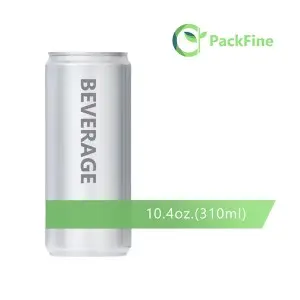
When Capacities Are Similar, Changing the Can Format May Be More Effective
Creating a different product identity does not always require changing the volume.
Standard, Sleek, and Slim cans can create noticeably different visual proportions even when their capacities are similar.
For example, two cans can both hold 330ml while presenting very different packaging profiles. A Standard can offers a more familiar and compact proportion, while a Sleek can has a taller and narrower silhouette. When the serving volume should remain similar but two sub-ranges need stronger visual separation, changing the body format can be more meaningful than adding another closely related capacity.
A beverage portfolio could use a 330ml Standard can for its core soda, beer, or everyday beverage range, while a 330ml Sleek can supports a functional or more contemporary sub-range.
This keeps the capacity system relatively simple while still creating clear visual hierarchy between products.
When planning beverage can sizes, capacity and body format should therefore be considered separately. Capacity defines how much beverage the package contains, while the can format influences its physical proportions and visual presentation. They do not always need to change together.
The Real Risk in a Multi-Product Range Is Specification Fragmentation
As a beverage range expands, the biggest source of complexity is not necessarily the number of products. It is the number of packaging combinations behind those products.
Imagine a beverage range using three body formats, four capacities, several can end specifications, different internal coatings, and multiple printed designs. The number of possible packaging configurations can increase quickly.
If every product uses an independent packaging specification, several practical problems can emerge.
First, product information becomes more difficult to manage. Different beverages may require different bodies, ends, coatings, and artwork files, increasing the risk of specification confusion as the range grows.
Second, similar but non-interchangeable empty cans and related components can accumulate, making the overall packaging structure more complicated.
More importantly, whenever a new flavor or sub-range is introduced, it becomes increasingly difficult to determine whether it should continue using an established specification or create yet another packaging combination.
A mature beverage can portfolio should therefore follow a simple principle:
Use as few stable base can formats as practical to support as many product variations as possible.
Separate the Base Can Specification from the Visual Version
For beverage ranges with multiple product variants, it can be useful to manage the aluminum can package at two different levels.
The first level is the relatively stable base specification. This includes capacity, body format, can dimensions, opening specification, matching can end, and internal protection system. Once these elements are confirmed, they should remain as stable as possible.
The second level is the visual product version. This includes color, graphics, flavor names, illustrations, and product information.
For example, six different beverage flavors could all use the same 330ml Sleek can. Different printed designs identify each product, while the basic packaging structure remains unchanged.
This approach is particularly useful for ranges that plan to introduce new flavors, seasonal editions, or regional versions over time.
The products can continue to evolve without rebuilding the underlying can system for every new release.
What Can a More Mature Beverage Can Portfolio Look Like?
Consider a beverage range that includes functional drinks, a core sparkling beverage line, and larger-volume versions. A relatively simple but scalable structure could be built around a few key formats.
A 200ml Sleek can could support compact functional products. Multiple flavors could continue using the same body format, with only the printed design changing.
A 330ml Standard can could serve as the main format for original, zero-sugar, and several flavored products while maintaining a consistent physical package.
If a more elongated sub-range is needed, a 330ml Sleek can could be introduced. The capacity remains unchanged, but the different body proportions create a distinct product identity.
A 500ml Standard can could then serve as the larger-volume extension while continuing the visual language of the core product family.
Such a system uses only a limited number of base formats but can support different capacities, multiple flavors, and several product positions.
For beverage ranges designed to continue expanding, this is often clearer than continually introducing independent specifications.
Packfine Aluminum Beverage Can Portfolio
Packfine offers aluminum beverage cans in Standard, Sleek, Slim, and Stubby formats, covering capacities including 180ml, 200ml, 250ml, 330ml, 355ml, 473ml, and 500ml, together with corresponding can ends, blank cans, and printed can options.
For beverage ranges involving multiple product variants, several capacities, and long-term expansion, a more effective strategy is not simply to introduce more independent specifications. Instead, a limited number of stable base can formats can be used to create a clear and scalable packaging platform.
A mature beverage can portfolio should ultimately allow new products to be added while the underlying packaging structure remains clear, stable, and expandable.
FAQ
How many beverage can sizes should a product range use?
There is no fixed number. Each capacity should have a clear role. A limited number of well-defined base formats is often more effective than maintaining many similar sizes with overlapping purposes.
Does every new flavor need a different aluminum can size?
No. If serving volume and product position remain similar, several flavors can use the same can specification and be differentiated through artwork and product information.
When should a new can capacity be added?
A new capacity is most useful when it supports a different serving volume, product category, or usage occasion that cannot be covered effectively by the existing formats.
Can Standard and Sleek cans be used in the same beverage range?
Yes. They can serve different visual or product roles. For example, Standard cans may support the core range while Sleek cans create a more elongated profile for a distinct sub-range.
Post time: Aug-12-2026