


Beverage can ends do much more than close an aluminum can. They help maintain internal pressure, protect the drink from external contamination, support stable filling-line operation, and create the final opening experience.
For carbonated soft drinks, beer, sparkling water, energy drinks, juice, and other canned beverages, the can end is a functional part of the complete package. Its size, material condition, score design, coating, sealing compound, and curl consistency all influence how the finished can performs.
A suitable can end should not only fit the can body. It should seal consistently, run smoothly on the production line, withstand the intended beverage conditions, and open in a predictable way.
One Small Component Has to Perform Several Jobs
A beverage can end must complete several functions at the same time.
It needs to:
- Form a secure double seam with the can body
- Maintain package strength under internal pressure
- Protect the beverage from air and contamination
- Support smooth feeding on the filling line
- Open without excessive force
- Keep the pull tab securely attached
- Maintain coating integrity during processing and storage
These requirements are closely connected.
For example, reducing the score residual can make an end easier to open, but the score must still remain strong enough during filling, transport, and stacking. Increasing metal strength may improve pressure resistance, but the opening system still needs to provide a comfortable and controlled response.
A reliable beverage can end is therefore the result of balanced design rather than a single strong feature.
Different Drinks Create Different Demands on the Can End
A can end used for carbonated beverages may experience different working conditions from one used for still juice or other non-carbonated drinks.
| Beverage application | Main conditions affecting the can end |
|---|---|
| Carbonated soft drinks | Continuous internal pressure, temperature changes, carbonation retention |
| Beer | Internal pressure, pasteurization conditions, flavor protection |
| Energy drinks | Acidity, carbonation, active ingredients, long storage periods |
| Sparkling water | Pressure resistance and consistent opening performance |
| Juice drinks | Acidity, coating compatibility, possible hot filling |
| Non-carbonated beverages | Filling method, nitrogen dosing, cooling and storage conditions |
This does not mean that every beverage requires a completely different end. It means the end should be evaluated according to the actual drink formula and processing method.
Two drinks packaged in cans of the same size may still have different coating, pressure, or storage requirements.
A Can End Should Be Matched to the Can Opening, Not Just the Capacity
Can capacity is often the first detail mentioned when discussing packaging, but it does not determine the end specification by itself.
A 250 ml slim can, 330 ml sleek can, 355 ml standard can, and 500 ml can may use different body formats. Some can bodies with different capacities may share the same neck and end specification, while cans with the same capacity may use different opening dimensions.
The important connection is between:
- The necked-in can opening
- The body flange
- The can end curl
- The seaming chuck and rolls
When these parts are properly coordinated, the body hook and cover hook can form a stable double seam.
This is why can body and can end selection should be considered together. Treating them as unrelated components can create avoidable adjustment work during filling-line setup.
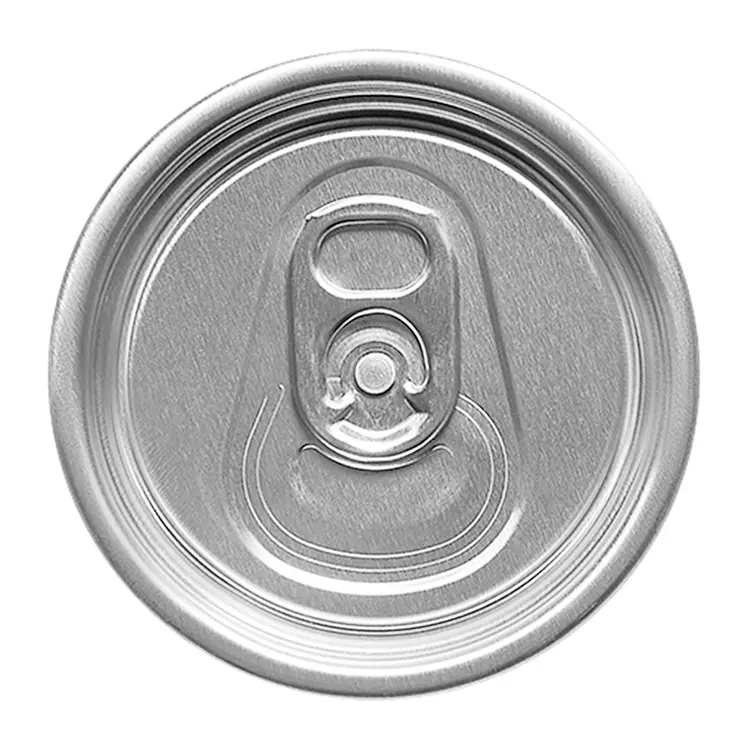
What Separates a Stable Can End from an Inconsistent One?
Can ends may appear similar from a distance, but small variations can produce very different results during high-speed production.
Several areas deserve particular attention.
Curl consistency
The curl is the formed outer edge of the end that connects with the can body flange during seaming.
Its profile needs to remain stable from one end to the next. Irregular curls can affect lid feeding, positioning, hook formation, and seam consistency.
Sealing compound placement
Sealing compound is applied inside the curl to help close microscopic channels in the double seam.
Uniform application supports repeatable sealing. Uneven compound, contamination, or unsuitable storage conditions may increase leakage risk.
Score control
The score line defines where the opening panel breaks when the tab is lifted.
The remaining metal beneath the score must be controlled carefully. Excessive residual metal can make the lid difficult to open, while insufficient residual metal may reduce resistance to impact or internal pressure.
Rivet and tab formation
The rivet connects the tab to the end panel and transfers the opening force toward the scored area.
Stable rivet formation and accurate tab positioning help create consistent initial rupture and controlled panel opening.
Surface coating
The internal coating helps separate the aluminum from the beverage.
Uniform coverage is important for maintaining package compatibility, especially when the drink contains acids, salts, alcohol, flavor ingredients, or active compounds.
Stable Production Starts Before the Seamer
A beverage can end must also perform as a production-line component.
During operation, ends need to separate cleanly, move through the feed system, reach the can in the correct position, and remain undamaged before entering the seamer.
Consistent end shape can help reduce:
- Irregular lid feeding
- End jams in the feed track
- Misalignment before seaming
- Frequent line adjustments
- Random seam variation
- Unnecessary material loss
Packaging protection also matters. Can ends are lightweight precision components, so impact, compression, moisture, or contamination during transport and storage can affect their final condition.
Strong outer packaging, orderly end sleeves, dry storage, and careful handling all help protect the curl, panel, and sealing area before production.
Opening Performance Is Part of the Product Experience
The pull tab is one of the few parts of the package that people directly interact with. A can may remain perfectly sealed through production and transport, but an unstable opening experience still affects the final impression.
A suitable easy-open end should provide:
- A tab that is easy to lift
- Predictable initial score rupture
- Smooth continuation of the opening path
- Secure tab attachment
- Controlled opening edges
- Consistent performance across production batches
The opening force should not simply be as low as possible. The objective is controlled opening without weakening the end during handling and storage.
This balance is especially important for beverages exposed to pressure or thermal processing.
Can End Quality Should Remain Consistent Across Large Production Runs
A few good samples do not represent the complete production result. Beverage packaging lines depend on repeated consistency across large quantities.
Stable can end production requires control over:
- Raw material condition
- Shell forming
- Curl dimensions
- Score residual
- Rivet formation
- Tab position
- Compound application
- Coating appearance
- Packaging cleanliness
When these factors remain within a controlled range, filling lines can operate with fewer unexpected changes.
Consistency also makes it easier to maintain seam settings. If the can end profile changes noticeably between batches, the line may require repeated adjustments even when the can body and seamer remain unchanged.
Why Coordinated Can and Can End Supply Matters
The can body and can end become one sealed package during production. Their dimensions, coatings, pressure performance, and seaming characteristics should therefore support each other.
Using coordinated cans and ends can simplify communication around:
- Can body and neck dimensions
- End compatibility
- Beverage application
- Printing and external appearance
- Internal coating requirements
- Packaging and transport protection
- Filling-line adaptation
It also helps reduce situations in which the can body, can end, and seaming setup are evaluated separately and only brought together at the final production stage.
Aluminum Cans and Can Ends from Packfine
Packfine provides aluminum beverage cans and matching can ends for different can formats and beverage applications.
The product range can be considered according to can shape, capacity, neck specification, beverage type, pressure conditions, coating requirements, and filling-line configuration.
By coordinating can bodies and can ends as a complete packaging solution, Packfine helps support stable seaming, reliable beverage protection, consistent opening performance, and a unified package appearance.
FAQ
What is the main function of a beverage can end?
A beverage can end forms a sealed connection with the can body, helps retain pressure, protects the beverage, and provides an easy-open structure for the finished package.
Can different beverage can sizes use the same end?
Yes, when the cans share the same neck and opening specification. Can capacity alone does not determine the can end size.
Are beverage can ends suitable for carbonated drinks?
They can be used for carbonated beverages when their material strength, panel structure, score design, coating, and seam specification match the expected pressure conditions.
What information helps determine a suitable can end?
Useful information includes the can format, neck specification, beverage type, filling temperature, carbonation or nitrogen conditions, thermal process, seamer configuration, and required opening style.
Post time: Jul-31-2026