


A Beer Can Lid is a small component, but it directly affects sealing, opening performance, and compatibility with the canning line. Selecting beer can lids should therefore involve more than confirming that a 202 size is required. The complete specification also includes End Design, SOT or RPT configuration, material, internal coating, and compatibility with the Can Body and Seamer.
For an existing beer filling line or a new packaging project, the most useful approach is to evaluate the Beer Can Lid as part of the complete Can + End system. The can body, Can End, and seaming conditions must work together to form a stable Double Seam, so matching only by nominal size can overlook important differences.
Beer Can Lid Is Part of the Seaming System
An Aluminum Can Lid and the can body become a sealed container only after the Double Seam is formed. During seaming, the Can End and the can flange are mechanically formed together, which means End Size alone cannot determine compatibility.
When evaluating a new beverage can lid, several conditions should be confirmed together: the can top specification, End Size, End Design, SOT or RPT system, existing Seamer Tooling, and any coating requirements. This is especially important when a new End must run on an existing line, because a dimensionally similar product may still require verification before stable production.
A 202 Can End Is More Than Just “202”
The 202 Can End is widely used in beer and other beverage cans, but the 202 designation only identifies a size family. A 202 End may still use different SOT, RPT, B64, CDL, or SOE configurations, so two products with the same size code are not automatically identical.
For an existing beer package, the current Can + End combination is usually the best reference. Useful information includes the existing End Size, SOT or RPT configuration, End Profile, Can Body specification, Seamer Tooling, and physical sample or drawing.
A practical matching sequence is:Can Body → End Size → End Design → Tab System → Seamer Compatibility. This sequence is more reliable than assuming that any 202 lid can be used with any 202-compatible beer can.
SOT and RPT Are Part of the End Specification
SOT and RPT are two common opening systems used in Beer Can Lids. SOT, or Stay-On Tab, keeps the tab attached to the lid after opening. RPT, or Ring Pull Tab, uses a different pull-tab structure.
The choice between them should not be treated only as a visual preference because the Tab System is part of the overall End Specification. For an existing package, maintaining the current opening system can help reduce unnecessary changes. For a new package, SOT or RPT can be considered together with Can Format, End Size, and the intended product design.
The same principle applies to terms such as B64, CDL, and SOE. These refer to different Beverage End Designs rather than beverage capacities. A 330ml, 355ml, 473ml, or 500ml can may all use a 202 End while still requiring different End configurations.
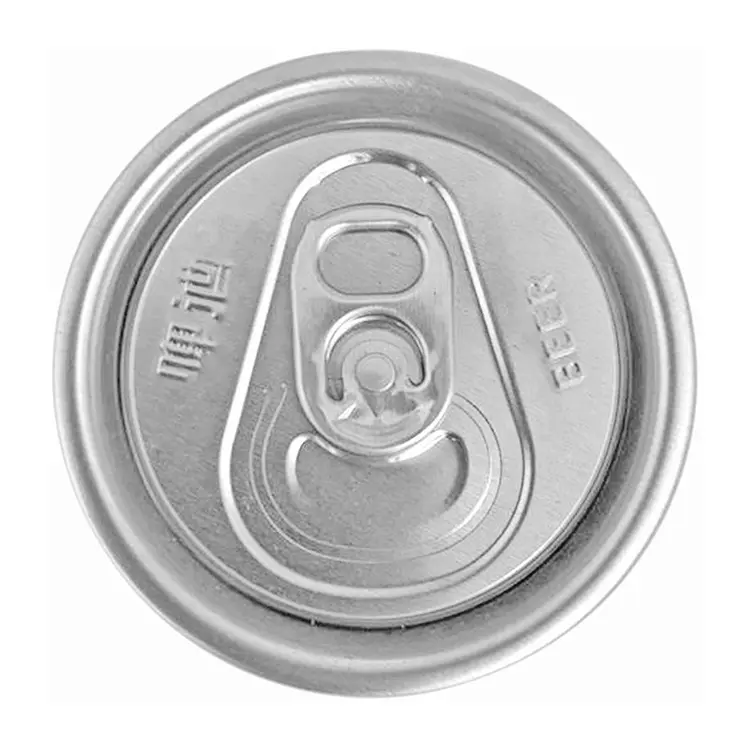
Replacing an Existing Beer Can Lid
When an existing beer line is already running consistently, replacing the Beer Can Lid should begin with the current specification rather than a generic request for “another 202 lid.”
The most useful references are the current Can Body, End Size, Tab System, End Design, seaming conditions, and existing sample. These details make it easier to compare a replacement End and identify any differences before larger production runs.
This is also where the capability of a beer can lid supplier matters. A useful supplier should be able to work from existing technical conditions and narrow the suitable End configuration instead of matching only by diameter or size code.
New Beer Packaging Can Plan Can and End Together
For a new packaging project, the Can Body and beverage can ends can be selected together from the beginning. This is particularly useful when a product range may later include several capacities.
For example, different Standard Can capacities may use a similar body diameter and the same 202 End platform while changing mainly in height. This can make it easier to maintain a consistent top structure across several SKUs, even though individual production settings and secondary packaging may still require adjustment.
Planning the End platform early also reduces the need to develop a completely separate closure system every time a new capacity is added.
What Should Be Confirmed Before Finalizing a Beer Can Lid?
Before a Beer Can Lid moves into sample approval or production, the specification should clearly define the Can Body, End Size, End Design, SOT or RPT configuration, and Seamer conditions. If the project uses an existing filling line, current Tooling information is also valuable.
Customization requirements should be identified at the same stage. Colored Ends, Colored Tabs, Printing, QR Codes, and Embossing can all become part of the final End specification. Defining these requirements early makes it easier to avoid changing the basic End structure after samples have already been developed.
What Matters When Choosing a Beer Can Lid Supplier
For high-volume beverage packaging, the value of a beer can lid supplier is not simply whether a 202 End is available. Matching capability is more important.
A suitable aluminum can lids supplier should be able to support different Beverage Can End structures, work with common Aluminum Can Formats, provide SOT and RPT options, and communicate clearly about specifications before production. For customized packaging, additional options such as Colored Ends, Colored Tabs, Printing, QR Codes, or Embossing can also be useful.
This becomes especially important when a project includes multiple capacities or an existing Seamer setup that should remain unchanged. In these cases, the supplier needs to understand the relationship between the Can Body, End, and production conditions rather than treating the lid as an isolated component.
How Packfine Supports Beer Can Lid and Beverage Can Ends Requirements
Packfine provides Beer Can Lids, Aluminum Can Lids, and Beverage Can Ends in common 202 and 200 sizes, with SOT, RPT, B64, CDL, and SOE-related options. Packfine also supplies multiple Aluminum Beverage Can Formats, including Standard, Sleek, and Slim, allowing the Can Body and Can End to be considered as one packaging combination.
For an existing beer project, matching can begin with the current Can Body, End Size, End Design, and sample. This helps narrow the replacement Beer Can Lid without treating all 202 Ends as identical.
For a new project, the Can Format, capacity, Beverage Can End, and Tab System can be planned together. If the product range later expands into 330ml, 355ml, 473ml, or 500ml capacities, the same End platform can be considered across multiple SKUs where appropriate.
Packfine can also support customized End options such as Colored Ends, Colored Pull Tabs, Printing, QR Codes, and Embossing. This allows the project to coordinate Can Body + Can End + Opening Design + Decoration within one packaging system.
Conclusion
Choosing a Beer Can Lid is not simply a matter of finding a 202 Aluminum Lid. End Size, SOT or RPT configuration, B64/CDL/SOE design, Can Body, Seamer Compatibility, and customization requirements all contribute to the final specification.
For an existing beer line, the current Can + End combination is the most useful reference. For a new package, planning the Can Body and beverage can ends together can make future SKU expansion easier and reduce unnecessary changes.
As a beverage can ends supplier, Packfine can support multiple End structures together with different Aluminum Beverage Can Formats, helping move a project from a general Beer Can Lid requirement to a more complete Can + End solution.
FAQ
What size is commonly used for a Beer Can Lid?
Many modern beer cans use a 202 Beverage End, but the final specification should also confirm the Can Body, End Design, SOT or RPT structure, and Seamer conditions.
Are all 202 Beer Can Lids interchangeable?
No. The same 202 designation does not mean every End has the same structure or Tooling requirements.
What is the difference between SOT and RPT Beer Can Lids?
SOT keeps the tab attached after opening, while RPT uses a Ring Pull structure. Both are part of the overall End Specification.
What information should be provided to an aluminum can lids supplier?
Can Body specification, End Size, SOT or RPT requirement, known End Design, existing sample or drawing, Seamer conditions, and customization requirements are the most useful starting points.
Post time: Sep-09-2026