


In aluminum beverage packaging, 202 can ends, 200 can ends, and 206 can ends are common closure size families, but they cannot be identified by beverage capacity alone. Capacities such as 250ml, 330ml, or 500ml describe how much liquid a can holds, while 200, 202, and 206 refer to the size system used for the can neck and end.
As a general reference, a 200 can end is approximately 49.5–50 mm, a 202 can end is approximately 52–52.5 mm, and a 206 can end is approximately 57 mm. Exact measurements can vary slightly between end designs and manufacturing specifications, so these values should be treated as general size references rather than substitutes for the actual can and end drawings.
For practical can end compatibility, a more reliable matching sequence is:Can format → Neck specification → Can end size → End profile → Seaming requirements
This approach is more accurate than assuming that all 330ml cans use 202 ends or all 250ml cans use 200 ends.
200 vs 202 vs 206 Can Ends: Quick Comparison
| Can End Size | Approx. Diameter | Common Can Formats | Typical Capacity Examples | Main Compatibility Check |
|---|---|---|---|---|
| 200 Can End | 49.5–50 mm | Slim and narrow-neck cans | 150ml, 187ml, 200ml, 250ml Slim | Confirm a 200 neck specification |
| 202 Can End | 52–52.5 mm | Standard, Sleek, and many mainstream beverage cans | 330ml, 355ml, 440ml, 473ml, 500ml and others | Confirm the 202 neck and specific end profile |
| 206 Can End | Approx. 57 mm | Selected wider-neck or regional can formats | Specification-dependent | Confirm a dedicated 206 neck specification |
This chart provides a useful starting point, but the most important rule is simple: can end size is determined by the can neck design, not by beverage capacity alone.
Why Are 200 Can Ends Commonly Used with Slim Cans?
The 200 can end is commonly associated with narrower beverage-can necks. Slim cans in capacities such as 150ml, 187ml, 200ml, and 250ml can use the same 200 neck family even though their heights and internal volumes are different.
This illustrates an important feature of aluminum beverage can design: the capacity and height of the can can change while the top closure system remains within the same size family. A beverage range can therefore use several compact can sizes without necessarily introducing a different can end for every capacity.
Although 200 can ends are frequently seen on energy drinks and functional beverages, they should not be treated as “energy drink ends.” Narrow-neck aluminum cans can also be used for carbonated drinks, juice, coffee, and other suitable beverages. Compatibility is primarily determined by the physical can structure and the complete packaging specification.
Why Do 202 Can Ends Cover So Many Beverage Can Sizes?
The 202 can end is one of the most widely used closure sizes for modern aluminum beverage cans. Its compatibility is not limited to one capacity or body format.
Depending on the can specification, the 202 neck family can be found across formats such as:
- 330ml Standard cans
- 330ml Sleek cans
- 355ml beverage cans
- 440ml Standard cans
- 473ml cans
- 500ml Standard cans
This means that a 330ml can and a 500ml can can have very different body heights and still use the same nominal 202 end size. The reason is that the upper part of a two-piece beverage can is necked inward before the can end is attached.
For beverage ranges that include several mainstream capacities, the 202 family can therefore be used across multiple products. However, identifying an end as “202” is only the first step. The specific end profile and opening design must also be confirmed.
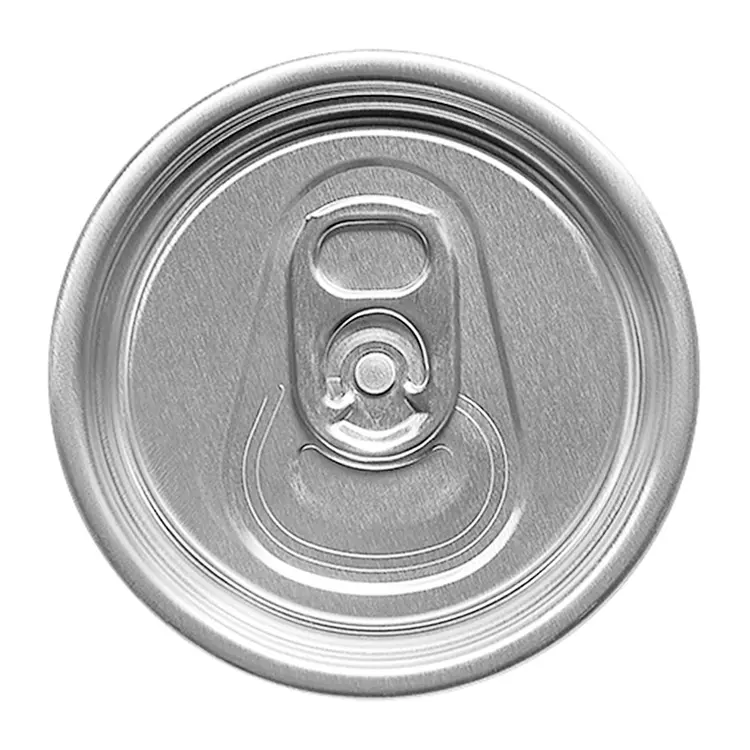
Where Do 206 Can Ends Fit?
A 206 can end has an approximate diameter of 57 mm and is wider than both 200 and 202 ends. It is used with selected wider-neck beverage cans and certain regional or special can specifications.
Unlike the common relationship between 200 ends and Slim cans or between 202 ends and many Standard and Sleek cans, 206 should not be linked to a fixed capacity list. A 500ml can, for example, should not automatically be classified as either a 202 or 206 can simply because of its volume.
The correct end size depends on the actual neck and flange dimensions of the can. If a can is engineered with a 202 neck, a 206 end is not a direct substitute simply because its diameter is only slightly larger.
Body Diameter, Neck Diameter, and Can End Size Are Different Measurements
One of the most common sources of confusion in beverage can specifications is treating body diameter, neck diameter, and end size as the same measurement.
Can body diameter refers to the diameter of the main cylindrical section of the can. Can neck diameter refers to the reduced diameter near the top of the can after the necking process. Can end size identifies the nominal closure family, such as 200, 202, or 206.
A common Standard beverage can can have a body diameter of approximately 66 mm while using a 202 end of around 52 mm. There is no contradiction between these numbers because they describe different parts of the package.
The structure can be understood as:Wider can body → necked upper section → smaller opening → matching can end
For this reason, seeing both “66 mm” and “202” in the specifications of the same aluminum can is completely normal.
Why Can the Same Capacity Use Different Can Ends?
Statements such as “250ml uses 200,” “330ml uses 202,” or “500ml uses 202” can be useful as quick examples, but they should not be treated as universal compatibility rules.
The same nominal capacity can be produced in different body formats. A 250ml Slim can and a 250ml Sleek can may have different body proportions and neck structures. Likewise, a 330ml Standard can and a 330ml Sleek can contain the same nominal volume but use noticeably different body dimensions.
A more reliable identification process is:
- Confirm the capacity.
- Identify the can format, such as Slim, Sleek, or Standard.
- Check the neck specification.
- Determine the required can end size.
- Confirm the exact end profile.
Capacity helps narrow down possible configurations, but it does not provide enough information for final can-end selection.
Why Are 202 B64 and 202 CDL Not the Same Specification?
Another important distinction is the difference between can end size and can end profile.
For example, both 202 B64 SOT and 202 CDL SOT belong to the 202 nominal size family. However, this does not mean their complete structures and seaming conditions are identical.
A designation such as 202 B64 SOT contains several layers of information:
- 202 identifies the nominal end-size family.
- B64 identifies a specific end profile.
- SOT means Stay-On-Tab, where the tab remains attached after opening.
Other 202 can ends may use CDL or different end designs. As a result, two ends with the same nominal diameter can still differ in geometry and seaming requirements.The practical rule is:The same nominal can end size does not automatically mean the same complete end specification.
When changing from one 202 end design to another, the specific end profile and corresponding seam requirements should be checked rather than relying only on the “202” designation.
Which Can End Size Should Be Used?
For an initial comparison, the three size families can be understood this way.
200 Can Ends are mainly associated with Slim and narrow-neck beverage cans. Typical examples include 150ml, 187ml, 200ml, and 250ml Slim formats.
202 Can Ends have a much broader application range and are commonly found across 330ml, 355ml, 440ml, 473ml, 500ml, and other Standard or Sleek beverage can configurations.
206 Can Ends are wider and are used with selected cans specifically designed around a 206 neck. They should not be selected based on capacity alone.
The final compatibility relationship should always be considered as:Can Body + Neck Specification + Can End Size + End Profile
rather than simply:Can Capacity + Lid Size
This is the key principle when comparing 200 vs 202 vs 206 can end compatibility.
Packfine 200, 202, and 206 Can Ends
Packfine offers aluminum beverage can ends across the 200, 202, and 206 size families, together with matching aluminum beverage cans in different capacities and body formats. Available configurations include different end profiles and opening designs such as B64, CDL, SOT, and RPT according to the applicable can specification.
For beverage projects involving Slim, Sleek, Standard, or multiple can capacities, the more reliable approach is to determine the can format and neck specification first, then confirm the corresponding end size and end profile. This keeps the can body and closure system matched as one complete packaging specification.
FAQ
1、What is the difference between 200, 202, and 206 can ends?
The primary difference is the nominal end diameter. A 200 can end is approximately 49.5–50 mm, a 202 can end approximately 52–52.5 mm, and a 206 can end approximately 57 mm. Exact dimensions may vary slightly depending on the manufacturer and end profile.
2、Does a 330ml aluminum can always use a 202 can end?
No. Many common 330ml Standard and Sleek cans use 202 ends, but capacity alone does not determine compatibility. The actual can format and neck specification should be confirmed.
3、Should a 250ml can use a 200 or 202 end?
It depends on the can format. A 250ml Slim can commonly uses a 200 neck, while other 250ml formats may use a different neck specification. The can drawing should be checked before determining the end size.
4、Are all 202 can ends interchangeable?
Not automatically. Different 202 ends can use B64, CDL, or other profiles. Although they belong to the same nominal size family, their geometry and seaming requirements may differ, so the complete end specification should be confirmed.
Post time: Aug-14-2026