


Easy open ends play an important role in maintaining the integrity of beverage and food cans. Even when the can body and lid appear undamaged, sealing problems can lead to product leakage, contamination risks, reduced shelf life, and production losses. These issues are not always caused by the easy open end alone. In many cases, they result from a mismatch between the end, the can body, and the seaming process.
Understanding the causes of sealing defects helps manufacturers identify problems earlier, improve packaging reliability, and avoid unnecessary adjustments to the production line.
Incorrect Can End and Can Body Compatibility
One of the most common causes of sealing problems is dimensional incompatibility between the easy open end and the can body. The end must match the can’s specifications and the seaming equipment to form a consistent, reliable seal.
Differences in end diameter, curl geometry, flange dimensions, or can body specifications can affect how the components fit together during seaming. Even when the dimensions appear close to the target values, small deviations may influence the final seam structure.
This issue can become more noticeable when switching suppliers, introducing a new can format, or changing production equipment. A lid that performs well on one can body is not automatically suitable for another, even if the nominal diameter is the same.
Prevention: Confirm the end profile, dimensions, and applicable specifications before production. When introducing a new easy open end, validate its compatibility with the intended can body and seaming equipment through trial runs and seam inspections. Avoid relying on nominal diameter alone when assessing compatibility.
Improper Seaming Parameters
The quality of the final seal depends heavily on the double-seaming process. During seaming, the can end and body flange are mechanically interlocked to create a seam that protects the contents. Incorrect setup can compromise this structure.
Insufficient or excessive seaming pressure, incorrect roller settings, worn tooling, and inconsistent machine adjustment can contribute to defects such as loose seams, wrinkles, excessive tightness, or other forms of seam deformation. These defects may affect sealing performance even when the easy open end itself meets its dimensional requirements.
It is important to distinguish between an end-related defect and a process-related defect. Replacing a batch of lids without checking the seaming equipment may not solve the underlying problem.
Prevention: Establish appropriate seaming parameters for the specific can and end combination. Inspect tooling condition, monitor critical seam dimensions, and perform regular seam teardown evaluations according to the applicable quality procedures. Any adjustment should be based on measured results rather than visual appearance alone.
Damage to the Curl, Flange, or Sealing Surface
Physical damage can occur during handling, transportation, storage, or feeding into the production line. Dents, deformed curls, scratched coatings, and contaminated contact surfaces may interfere with proper seaming or reduce the integrity of the finished package.
The curl and flange are particularly important because they participate directly in forming the seam. If these areas become distorted, the seaming operation may not produce a uniform result. Surface damage can also become a concern when it compromises protective coatings or exposes the underlying metal.
Packaging and handling conditions therefore deserve attention alongside manufacturing quality. A product that passes inspection at the factory may still develop defects if it is poorly protected during transit or storage.
Prevention: Use suitable packaging to protect easy open ends from impact, moisture, dust, and deformation. Store products in clean, dry conditions and handle them carefully during loading and line feeding. Incoming inspections should check not only dimensions but also visible damage, contamination, and packaging condition.
Inconsistent End Dimensions or Material Performance
Production consistency is another important factor in sealing reliability. Variations in critical dimensions, curl formation, material thickness, or forming characteristics can affect how easy open ends behave during high-speed seaming.
A single end outside the required tolerance may cause an isolated defect, while repeated variation across a batch can create persistent problems on the production line. Such variation may lead to frequent adjustments, unstable seam measurements, increased inspection requirements, and higher rejection rates.
Material performance also matters because the end must retain sufficient structural integrity during forming and use. However, material thickness alone does not determine sealing quality. The complete design, forming process, dimensional control, and compatibility with the can body must work together.
Prevention: Apply consistent dimensional inspection and process controls to critical features. Monitor batch-to-batch variation and investigate recurring deviations rather than treating each defect as an isolated incident. Where problems persist, compare samples from different batches and review the relevant production and inspection records.
Contamination and Inadequate Handling Control
Foreign particles, oil residues, dust, or other contaminants around the end or can flange may interfere with the seaming process. The level of risk depends on the type of contaminant, its location, and the packaging application.
Contamination can be difficult to identify through a quick visual check, especially when it is present in small quantities or becomes trapped during forming. For food and beverage packaging, it is also necessary to maintain suitable hygiene and handling controls throughout storage and production.
Prevention: Keep end-feeding equipment and the surrounding production area clean. Protect exposed ends from environmental contamination and establish clear procedures for handling damaged or contaminated materials. If contamination is suspected, investigate the source instead of relying solely on finished-package inspection.
How to Identify the Root Cause of Sealing Problems
When sealing defects occur, changing multiple production settings at once can make the cause harder to identify. A more effective approach is to classify the defect, collect measurements, and investigate the most likely contributing factors systematically.
The following checks can help narrow down the cause:
- Review the defect pattern: Determine whether the issue affects isolated cans, a particular production period, one batch of ends, or multiple batches.
- Inspect the finished seam: Evaluate seam dimensions and structure using the appropriate inspection methods and acceptance criteria.
- Verify component compatibility: Confirm that the end and can body match the approved specifications and that no recent changes have affected their fit.
- Check equipment condition: Review seaming roller settings, tooling wear, machine alignment, and recent maintenance or adjustments.
- Compare batches: If the defect started after a material or supplier change, compare the affected batch with previously accepted samples.
The goal is to establish a relationship between the observed defect and its likely cause before implementing corrective action. Where a seal-integrity issue is suspected, affected product should be managed under the applicable quality procedures until the risk has been assessed.
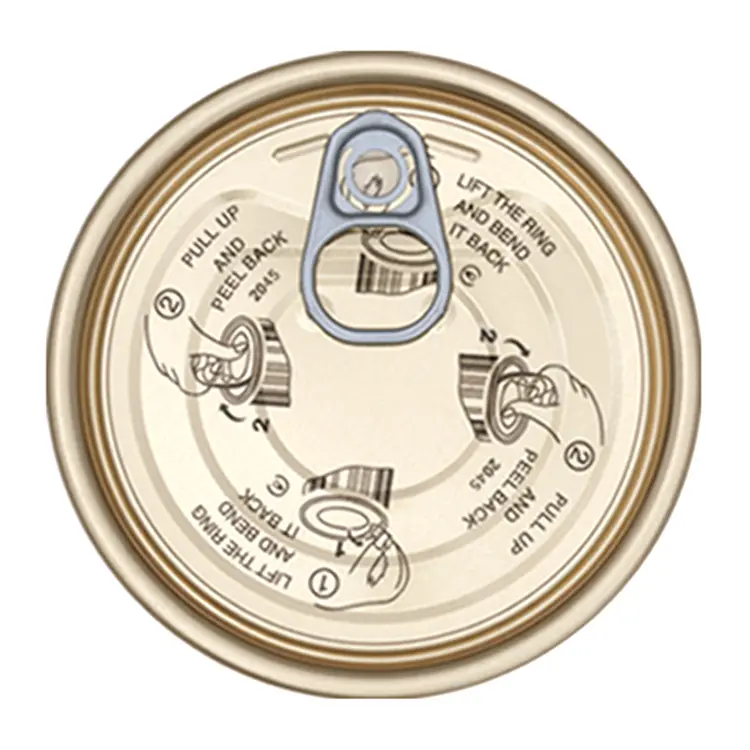
Choosing Easy Open Ends with Reliable Sealing Performance
Preventing sealing problems begins before production. Selecting an easy open end involves more than comparing price or nominal size. Dimensional consistency, material characteristics, end design, protective coating, and compatibility with the intended can body all influence the finished package.
It is also important to consider the actual application. Beverage packaging may require a different end specification from certain food or specialty packaging formats. The expected filling conditions, internal pressure, handling requirements, and intended storage conditions should be considered when confirming product suitability.
Before placing a repeat order or changing specifications, confirm the critical dimensions, applicable quality requirements, and compatibility with the existing production line. Samples and production trials can help verify performance before a larger order is introduced.
For manufacturers seeking dependable packaging components, Packfine offers aluminum beverage cans and easy open ends, including SOT and RPT formats.Confirming specifications and compatibility before production helps reduce avoidable sealing issues and supports more consistent packaging performance.
Conclusion
Easy open end sealing problems can result from dimensional incompatibility, incorrect seaming parameters, physical damage, inconsistent manufacturing, or contamination. Because these factors may interact, replacing the lid alone does not always resolve the issue.
Reliable results depend on matching the end to the can body, controlling the seaming process, protecting components during handling, and monitoring critical quality characteristics. A systematic approach to inspection and root-cause analysis helps reduce defects, limit production interruptions, and maintain the integrity of the finished package.
FAQ
1. What is the most common cause of easy open end sealing problems?
Sealing problems can arise from incorrect component dimensions, unsuitable seaming settings, damaged ends, or inconsistent production conditions. The most likely cause depends on the defect pattern and the results of seam inspection.
2. Can an easy open end cause leakage even if it looks undamaged?
Yes. An end may appear visually acceptable while its dimensions or compatibility with the can body are unsuitable. Seaming defects may also develop because of equipment settings or tooling conditions. Appropriate seam inspection is necessary to verify sealing integrity.
3. How can manufacturers reduce easy open end sealing defects?
They can confirm component compatibility, maintain suitable seaming parameters, inspect tooling regularly, protect ends during storage and transport, and monitor dimensional consistency between batches. Defects should be investigated systematically rather than addressed through repeated adjustments without evidence.
4. What should be checked before changing easy open end suppliers?
Review the end dimensions, design, material and coating requirements, quality specifications, and compatibility with the existing can body and seaming equipment. Sample evaluation and production trials can help identify potential issues before full-scale use.
Post time: Oct-09-2026