


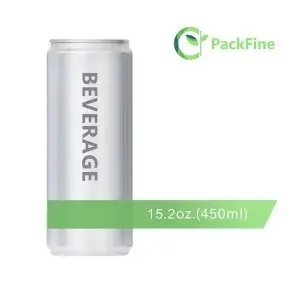
Sleek Cans are a taller and narrower aluminum beverage can format compared with traditional Standard Cans. They are commonly used for energy drinks, sparkling beverages, beer, functional drinks, and other products that benefit from a more elongated package profile. Their value is not limited to appearance, because the can format also affects body proportions, printable area, and the way different capacities are presented within a beverage range.
For beverage projects, a Sleek Can is more than simply a “tall can” or a “narrow can.” Capacity, body dimensions, decoration method, and the corresponding Can End together define the final package. Before a product enters regular production, it is important to understand what “Sleek” actually means and which packaging conditions need to remain consistent over time.
What Is the Practical Difference Between Sleek, Standard, and Slim Cans?
Sleek, Standard, and Slim primarily describe the proportions of the can body rather than the beverage capacity. Standard Cans are generally wider and have the more traditional beverage-can profile. Slim Cans are narrower and more elongated, while Sleek Cans usually sit between the two, offering a taller profile without becoming as narrow as a typical Slim format.
| Can Format | Main Body Profile | Typical Packaging Character |
|---|---|---|
| Standard Can | Wider, traditional proportions | Classic beverage-can appearance |
| Sleek Can | Narrower and taller | Elongated without being extremely slim |
| Slim Can | Narrower and more slender | Strongly elongated visual profile |
It is important to note that Sleek does not refer to one fixed capacity. Different volumes, such as 250ml, 330ml, and 355ml, can all use a Sleek format. As a result, the term “Sleek Can” by itself cannot replace a complete product specification.
Even when two cans are both 330ml, different formats may result in different heights, diameters, and overall proportions. This is why capacity alone is usually not enough to identify the correct can for an actual beverage project.
Why Are Sleek Cans Used in Modern Beverage Packaging?
The most obvious characteristic of a Sleek Can is its proportion. The taller body gives brand names, product names, and graphic elements more vertical space, while also creating a noticeably different shelf appearance from traditional wider cans.
This makes Sleek Cans suitable for a wide range of beverage categories. Energy drinks and functional beverages can use the elongated shape to create a more modern presentation, while sparkling drinks and flavored beverages can build stronger product-family recognition through different printed designs. Beer and other canned beverages may also use Sleek formats in different capacities depending on product positioning.
However, can format should not be selected independently from the actual beverage project. Capacity, product positioning, and current production conditions still matter. Choosing Sleek only because it looks more contemporary may create unnecessary design or production adjustments later if the physical packaging requirements have not been considered.
When Should Printed Sleek Cans or Blank Sleek Cans Be Used?
Sleek Cans can be supplied as Printed Cans or Blank Cans, depending on the stage and structure of the beverage project.
Printed Sleek Cans are better suited to products with finalized artwork and stable repeat production. Brand information, product details, and graphics are applied directly to the can body, making this format suitable for established SKUs and beverage ranges that require consistent packaging presentation.
Blank Sleek Cans provide more flexibility when another decoration method will be used or when a product is still in the testing or development stage. If artwork is still changing, or if different markets require more adaptable packaging, blank cans can leave more room for downstream decoration.
The decision should therefore be based on the current stage of the product rather than on the assumption that one option is always better. Established beverage products generally place more emphasis on repeatable printed consistency, while early-stage projects may need greater flexibility.
Why Should the Can End Be Considered in a Sleek Can Project?
The can body is only one part of the finished beverage package. Once a Sleek Can has been selected, the corresponding Can End also needs to be clearly identified.
This becomes especially important when an existing product changes can format. Even if the beverage capacity remains the same, other packaging components should not automatically be assumed to remain unchanged. Different can bodies may involve different neck and closure requirements, so the Can End should be confirmed according to the actual selected can.
For existing production, the current can body and Can End can provide useful reference information. For a new beverage project, confirming the can and the closure at the same stage can make the packaging specification clearer from the beginning.
The key point is to avoid relying only on general descriptions such as “330ml lid” or “Sleek can lid” without connecting the end to the actual can specification.
After the Sleek Can Is Approved, Supply Consistency Becomes More Important
Receiving one acceptable batch of Sleek Cans only proves that the product can enter the project. Once regular production begins, the more important question is whether the same approved packaging conditions can be maintained across future batches.
Beverage products are usually produced repeatedly, often over long periods. This means the same can body may be produced at different times while artwork and packaging versions continue to evolve. If the can specification, print version, and Can End information are not clearly managed, packaging confusion becomes more likely as production continues.
Stable supply therefore means more than having enough quantity available. It also means keeping the approved product specification clear and consistent so that every repeat production run does not require the project to start again from the beginning.
This becomes even more important when a beverage brand grows from one or two products into several flavors and capacities. At that stage, the ability to support both existing packaging and new product additions matters more than whether the first sample looked acceptable.
How Should Sleek Can Supply Capability Be Evaluated?
General statements such as “stable quality,” “long-term supply,” or “good service” provide limited value when evaluating a Sleek Can project. More useful evidence comes from the actual product and production information that can be managed over time.
The first area is a clear product specification. Capacity, actual can dimensions, can format, and the corresponding Can End should be linked to one defined package rather than identified only by a commercial product name.
The second is repeat production. When the same Sleek Can is produced again, the approved packaging specification and print version should remain consistent. For Printed Cans, artwork control is especially important. If the brand updates its design, the old and new versions should remain clearly separated so that an outdated file does not return to production.
Batch information is also useful. If an issue appears during transportation, inspection, or production, traceable batch records make it easier to identify the affected range instead of treating all inventory as one undifferentiated group.
These factors provide more practical evidence of supply capability than simply comparing how many different can formats are available.
Supply Capability Should Continue to Support Product-Line Expansion
Many beverage projects begin with only one Sleek Can and gradually expand into additional flavors, capacities, or market-specific versions. At this stage, packaging requirements become more complex.
If only the flavor changes while the physical package remains the same, the existing can body can continue to be used with a different print version. If a new capacity is introduced, it should be treated as a new physical can specification with its corresponding Can End.
A supply system that can support multiple capacities, Printed Cans, Blank Cans, and matching ends makes it easier to keep new products within a consistent packaging structure.
This is particularly relevant for beverage companies expanding their product range or increasing filling capacity, because new requirements can be added to the existing packaging system instead of creating an entirely separate supply arrangement for every new SKU.
How Can Packfine Support Sleek Can Projects?
Packfine can provide multiple capacities of Sleek Cans, together with Printed Can, Blank Can, and matching Can End options.
For new beverage projects, the specific package can be confirmed based on target capacity, beverage type, can format, and decoration requirements. For existing products, current can samples, dimensions, technical drawings, or Can End information can be used as references when evaluating the appropriate Sleek Can solution.
For beverage projects that already include several products or are preparing to expand their SKU range, new print versions or additional capacities can also be organized around the existing Sleek Can structure so that current and future packaging remain clearly connected.
If a target capacity or existing can sample is already available, the project can begin directly from that information instead of restarting from the general term “Sleek Can.” For new projects, beverage type, planned capacity, Printed or Blank requirements, and expected SKU quantity can also provide a useful basis for confirming the packaging solution.
FAQ
Does a Sleek Can Have Only One Fixed Size?
No. Sleek refers to a body proportion rather than a single capacity or universal dimension. Different Sleek Can capacities have different physical dimensions, so the actual specification should be confirmed for each project.
Can a Sleek Can Directly Replace a Standard Can of the Same Capacity?
Not based on capacity alone. Even when the volume is the same, Sleek and Standard cans may have different body proportions, which means artwork, physical dimensions, and related packaging conditions should be reviewed.
Can Several Flavors Use the Same Printed Sleek Can Specification?
Yes. If the physical packaging requirements remain the same, several products can share one Sleek Can body specification while using different artwork versions to distinguish individual SKUs.
Can Packfine Provide Both Sleek Cans and Can Ends?
Yes. Packfine can provide matching Can End options according to the selected Sleek Can specification and can support Printed Cans, Blank Cans, and different beverage-can capacities.
How Can a New Supply Option Be Evaluated for an Existing Sleek Can?
Existing samples, dimensions, technical drawings, Can End information, and current artwork can all serve as useful references. These materials provide a more accurate basis for comparison than relying only on the beverage capacity or a general product name.
Post time: Sep-16-2026