


In an increasingly competitive and efficiency-driven global market, packaging is no longer just a protective layer—it is a critical factor in ensuring product integrity, optimizing logistics, and supporting brand positioning. Among all packaging formats, aluminum cans have proven to be one of the most reliable and scalable solutions for beverage and food industries.
For B2B buyers, distributors, and manufacturers, aluminum cans offer a unique combination of durability, standardization, and flexibility. These qualities make them especially valuable for businesses operating across multiple regions, where consistency and long-term planning are essential.
What Are Aluminum Cans and Their Core Advantages
Aluminum cans are lightweight metal containers made from high-grade aluminum, designed to store and transport a wide range of beverages and food products. Their structure is engineered to provide strong sealing, pressure resistance, and compatibility with high-speed production systems.
Unlike other packaging materials, aluminum offers a complete barrier against oxygen, moisture, and light, ensuring that the contents remain stable throughout the entire supply chain.
● Excellent sealing performance to protect freshness and flavor
● High resistance to internal pressure for carbonated beverages
● Lightweight structure reduces transportation and storage costs
● Compatibility with easy open ends for consumer convenience
● Standardized production for consistent quality
These advantages have made aluminum cans a dominant packaging format worldwide.
Why Aluminum Cans Support Long-Term Business Stability
In B2B operations, long-term reliability is often more important than short-term trends. Aluminum cans provide a stable packaging solution that is not dependent on rapidly changing consumer preferences.
● Globally accepted standards ensure compatibility across markets
● Long product lifecycle reduces the need for packaging changes
● Suitable for multiple beverage categories with minimal adjustments
● Mature supply chain ensures consistent availability
● Reduced risk of obsolescence compared to customized packaging
This stability is particularly beneficial for exporters and companies managing diverse product portfolios.
Key Technical Performance of Aluminum Cans
From a technical standpoint, aluminum cans are designed to meet demanding production and distribution requirements.
● Sealing integrity: Prevents leakage and preserves carbonation
● Pressure resistance: Maintains structural strength under internal pressure
● Internal coating: Protects contents from metal interaction
● Dimensional precision: Ensures compatibility with automated filling lines
● Stacking strength: Supports efficient storage and transportation
Modern manufacturing processes further enhance performance:
● Advanced forming techniques improve structural consistency
● Lightweighting reduces material usage without compromising strength
● Improved coatings extend product compatibility
● Precision engineering ensures uniformity across batches
These technical features ensure reliable performance in real-world applications.
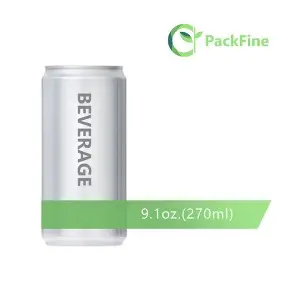
Applications Across Multiple Industries
The versatility of aluminum cans allows them to be used across a wide range of industries, making them a universal packaging solution.
● Carbonated soft drinks and sparkling beverages
● Energy drinks and functional beverages
● Beer and non-alcoholic beverages
● Ready-to-drink coffee and tea
● Canned food products
This broad applicability enables businesses to standardize packaging across different product lines.
Supply Chain Efficiency and Logistics Benefits
Efficient logistics are essential for B2B operations, especially in markets with long transportation routes and complex distribution networks. Aluminum cans offer significant advantages in this area.
● Lightweight design reduces shipping costs and fuel consumption
● Uniform sizes simplify palletization and storage
● High durability minimizes damage during transport
● Efficient stacking maximizes warehouse space utilization
● Compatibility with global logistics systems
These benefits contribute to lower operational costs and improved supply chain performance.
Branding and Design Flexibility
In addition to functionality, aluminum cans serve as an effective platform for brand communication. Packaging design plays a crucial role in attracting consumers and differentiating products.
● Full-body printing enables high-impact visual designs
● Matte and gloss finishes create premium positioning
● Textured coatings enhance tactile experience
● Support for seasonal and limited-edition designs
● Adaptable for different regional branding requirements
This flexibility allows brands to align packaging with their marketing strategies.
Sustainability and Long-Term Value
Sustainability is becoming a key consideration in packaging decisions. Aluminum cans offer strong environmental benefits due to their recyclability and material efficiency.
● Aluminum can be recycled repeatedly without quality loss
● Reduced reliance on single-use plastics
● Lower environmental impact when recycled material is used
● Alignment with global sustainability goals
● Support for circular economy models
These attributes make aluminum cans a future-proof packaging choice.
Continuous Innovation in Aluminum Can Manufacturing
The aluminum can industry continues to evolve through technological innovation and process optimization.
● Ongoing lightweighting reduces raw material usage
● Improved coatings enhance product compatibility
● Enhanced structural design increases durability
● Advanced printing technologies improve visual quality
● Greater consistency in large-scale production
These innovations ensure that aluminum cans remain competitive in a changing market.
Strategic Value for B2B Businesses
For B2B companies, aluminum cans represent more than a packaging solution—they are a strategic asset that supports long-term growth.
● Improve product protection and shelf life
● Enhance operational efficiency in production and logistics
● Reduce risks associated with packaging variability
● Enable expansion into multiple markets
● Strengthen brand competitiveness
In a business environment where reliability and efficiency are critical, aluminum cans provide a solid foundation.
Conclusion
Aluminum cans have established themselves as a core packaging solution due to their durability, efficiency, and adaptability. Their standardized design, strong technical performance, and broad application make them ideal for long-term business strategies.
For B2B buyers and manufacturers, investing in aluminum cans is not just a practical decision—it is a strategic move that ensures product quality, supply chain stability, and sustained competitiveness in global markets.
FAQ
What are aluminum cans mainly used for?
They are widely used for beverages such as soft drinks, beer, energy drinks, and ready-to-drink products, as well as certain food applications.
Are aluminum cans suitable for carbonated beverages?
Yes, they are specifically designed to withstand internal pressure and maintain carbonation.
Can aluminum cans be customized for branding?
Yes, they support various printing and finishing options to meet branding requirements.
What sizes are commonly available?
Common sizes include 250ml, 330ml, 355ml, 473ml, and 500ml, depending on market demand.
Post time: Apr-08-2026